A traditional Moroccan wedding is not a single ceremony followed by a reception. It is a sequence of rituals spread over several days, mixing the religious, the family and the party. Customs differ by region (Fez, Marrakech, the Souss, the North, the Sahara) and by family, but the backbone is widely shared. This guide walks through it in order, so you know what to expect as a guest, a partner marrying into a Moroccan family, or a couple deciding which traditions to keep for a destination wedding in Marrakech.
The timeline of a traditional Moroccan wedding
| Ritual | When | What happens |
|---|---|---|
| Khotba (the proposal) | Weeks or months before | The groom's family visits the bride's family to ask for her hand; milk and dates are shared and the main terms are agreed. |
| Marriage contract (adoul act) | Before the celebration, sometimes the same day | Two adouls (religious notaries) draw up the contract with the couple and witnesses; the dowry (sdaq) is recorded. This is the legal step. |
| Bride's hammam | One or two days before | A ritual bath with the women of the family and close friends: cleansing, songs and beauty care. |
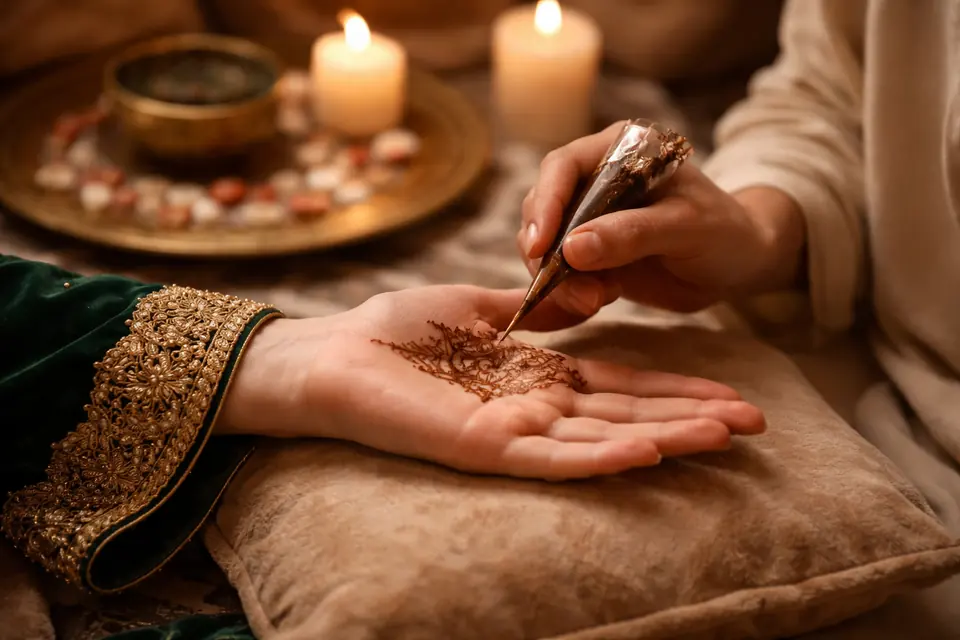
| Henna night | Usually the evening before | A nekacha (henna artist) draws patterns on the bride's hands and feet; green outfit, songs and blessings. |
| Gift procession (hdiya) | Before or during the festivities | The groom's family arrives in procession with gifts: sugar, milk, henna, fabrics, jewellery, sometimes a sheep. |
| The wedding night | Evening, often until dawn | The bride's successive entrances and outfit changes, the amariya, dinner, cake and dancing. |
| The day after | Next day | A quieter meal between the two families, sometimes a brunch for guests who travelled. |
In modern city weddings these steps are usually compressed into two or three days, and some are combined (henna and engagement on the same night, contract signed a few days before the party).
The marriage contract and the dowry
In Morocco a marriage is only legally concluded through the act drawn up by adouls and then approved by a judge. The dowry (sdaq) is a sum or item given by the groom to the bride; it is mandatory but its amount is free and often symbolic. For foreign or mixed couples this step requires paperwork prepared months ahead, which is why many choose a civil marriage at home and a symbolic ceremony in Morocco. Both routes are covered in our guide to getting married in Morocco.
The henna night
This is the bride's night, surrounded by the women of her family and her friends. The nekacha draws henna on her hands and feet; henna is believed to bring luck and protect the new home. The bride often wears green, the colour of prosperity, and receives blessings from the elders. Traditional music, mint tea and pastries: it feels more intimate than the main party. Many international couples add it as a pre-wedding event; see our henna party in Marrakech page.
The negafa and the amariya
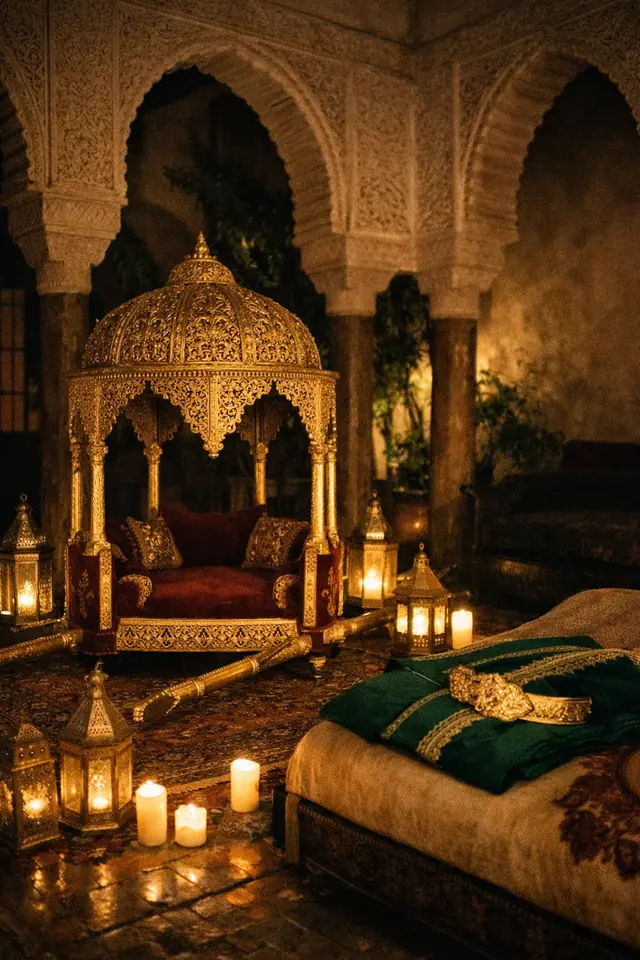
The negafa is the bride's mistress of ceremonies: she dresses her, adorns her with jewellery, decides the order of outfits and stages every entrance. The amariya is the ornate throne or palanquin on which the bride, and then often the couple, is lifted and carried around the room to ululations. It is the most photographed moment of the night, and the one our agency's name comes from.
The bride's outfits
The bride changes several times during the night, each outfit nodding to a region or tradition of Morocco. The most common:
- Lebsa fassia: the grand outfit of Fez, heavy brocade and a tall jewelled headdress, often worn for the first entrance or the amariya.
- Takchita and caftan: embroidered layered gowns in every colour, cinched with a jewelled belt (mdamma).
- The green outfit: linked to henna and good fortune.
- Regional outfits: Amazigh or Soussi (silver jewellery and fibulae), Sahrawi (draped melhfa), northern styles.
- The white gown: increasingly worn for the cake or the last part of the night.
The groom usually wears a djellaba or jabador, sometimes a white selham (cape), and switches to a suit for part of the evening.
What guests should wear
Women: a caftan or an elegant long dress; men: a suit, or a djellaba if you want to join in. Avoid all-white, which is kept for the bride. Comfortable shoes matter more than you think: dinner is served late and dancing goes on until the early hours. If your guests fly in, share this timeline with them ahead of time so the late dinner does not come as a surprise.
The music: dakka, chaabi and the orchestra
In Marrakech, the dakka marrakchia (collective percussion and chanting) accompanies the entrances and sets the energy of the night. Depending on the family, it is joined by women's groups (houariyat), an oriental or chaabi orchestra for dancing, sometimes an issawa troupe for the entrance, then a DJ late at night. Choosing and sequencing these acts is part of writing the evening's script.
The food
Dinner is served late, often after midnight. A typical Moroccan wedding menu: pastilla (chicken or seafood) to start, then one or two meat dishes (lamb tagine with prunes and almonds, chicken with olives and preserved lemon, sometimes mechoui), fruit, then mint tea and pastries (gazelle horns, fekkas, chebakia). The wedding cake arrives at the end of the night. Budgets are broken down in our Marrakech wedding cost guide.
Blending traditions into a destination or mixed wedding
Nothing obliges you to keep everything. Many cross-cultural couples choose a henna night plus one big party where the amariya, two or three Moroccan outfits and a Western segment (celebrant-led ceremony, white dress, first dance) follow each other. The key is to brief guests who are new to these codes. If you are planning from the UK or US, our remote planning method explains how it works, and the full offer is on your Marrakech wedding.
FAQ
How long does a Moroccan wedding last?
Traditionally several days, between the hammam, the henna night, the main party and the day after. Today most weddings are condensed into two or three days, and the main night itself often runs until dawn.
How many dresses does a Moroccan bride wear?
Usually between three and seven, depending on budget and on the negafa's plan. Each outfit change comes with a new entrance of the bride.
What is the amariya?
The ornate throne or palanquin on which the bride, and often then the couple, is carried shoulder-high in front of the guests. It is supplied and staged by the negafa and her team of bearers.
Can a non-Moroccan couple have a traditional Moroccan wedding?
Yes, as a celebration. The rituals (henna night, amariya, dakka, outfits) are part of the party and can be adopted by any couple. The legal marriage is a separate question, explained in our getting married in Morocco guide.
Is alcohol served at a Moroccan wedding?
At a traditional family wedding, usually not: guests drink mint tea, juices and soft drinks. At destination weddings in private villas or hotels, it depends on the venue's licence and the couple's choice.